Before that night, drinking mostly meant soju, beer, and the occasional sake to me. I had no reason to think wine would become something I kept returning to. But that first four-person wine gathering did more than widen my taste. It opened the pleasure of learning an unfamiliar world.
The gathering was small. There were only four of us: me, my friend, the sommelier who prepared the evening, and the organizer. Because there were almost no strangers around the table, the room felt comfortable from the start, and the unfamiliar language of wine came much closer.
We began around 7 p.m. by opening the wines prepared for that night one by one. As I listened, asked questions, and compared regions, grapes, aromas, acidity, and texture, the bottles that had first been placed on the table slowly disappeared. But the conversation did not end when those bottles were empty. Another question led to another glass, the table eventually held nine bottles, and the night deepened until 4 a.m. It felt less like a night of drinking and more like a night I stayed because I wanted to keep listening.
A First Gathering Made Deeper Because There Were Only Four of Us
I could have felt nervous because it was my first wine meeting, but a four-person table made it easy to ask questions. The organizer kept the flow relaxed, and the sommelier explained New Zealand regions and grape varieties step by step. When I did not understand something, I could ask, hear it again, and look for it in the glass.
That process was unexpectedly absorbing. Learning one thing did not make the subject smaller. It made the unknown parts clearer. Just as learning coffee had once expanded my language for flavor and aroma, wine began to unfold like a new map the more I listened.
The Learning That Outlasted the First Bottle
The first part of the night began with the New Zealand white wines we opened that evening. With Rapaura Springs Sauvignon Blanc in front of me, I began learning how acidity, aroma, and regional climate could show up in a glass. Until then, alcohol was something I simply drank. That night, it became something to read, hear, and compare.
Hunter's Gewurztraminer showed me that wine could not be reduced to one simple taste. Aroma arrived first, and as we searched for words to describe it, the same glass became a different sentence for each person.
Ohau Pinot Gris felt like another shape of white wine. Looking at texture and calmer fruit beyond simple freshness, I started to understand how changing one grape variety could change the whole landscape.
A Conversation That Lasted Until 4 A.M.
When we moved into red wine, the conversation deepened. Rapaura Springs Pinot Noir showed me that even under a familiar producer name, changing the grape could change the aroma, the mood, and the direction of the table.
Beetle Juice Pinot Noir stayed memorable from its name alone, but what lasted longer was the conversation around the bottle. One person noticed aroma first, another texture, another the finish. Even after the prepared wines were empty, the conversation kept going, and the time for bringing out our own senses carried on toward dawn.
The First Record Behind PodoNote
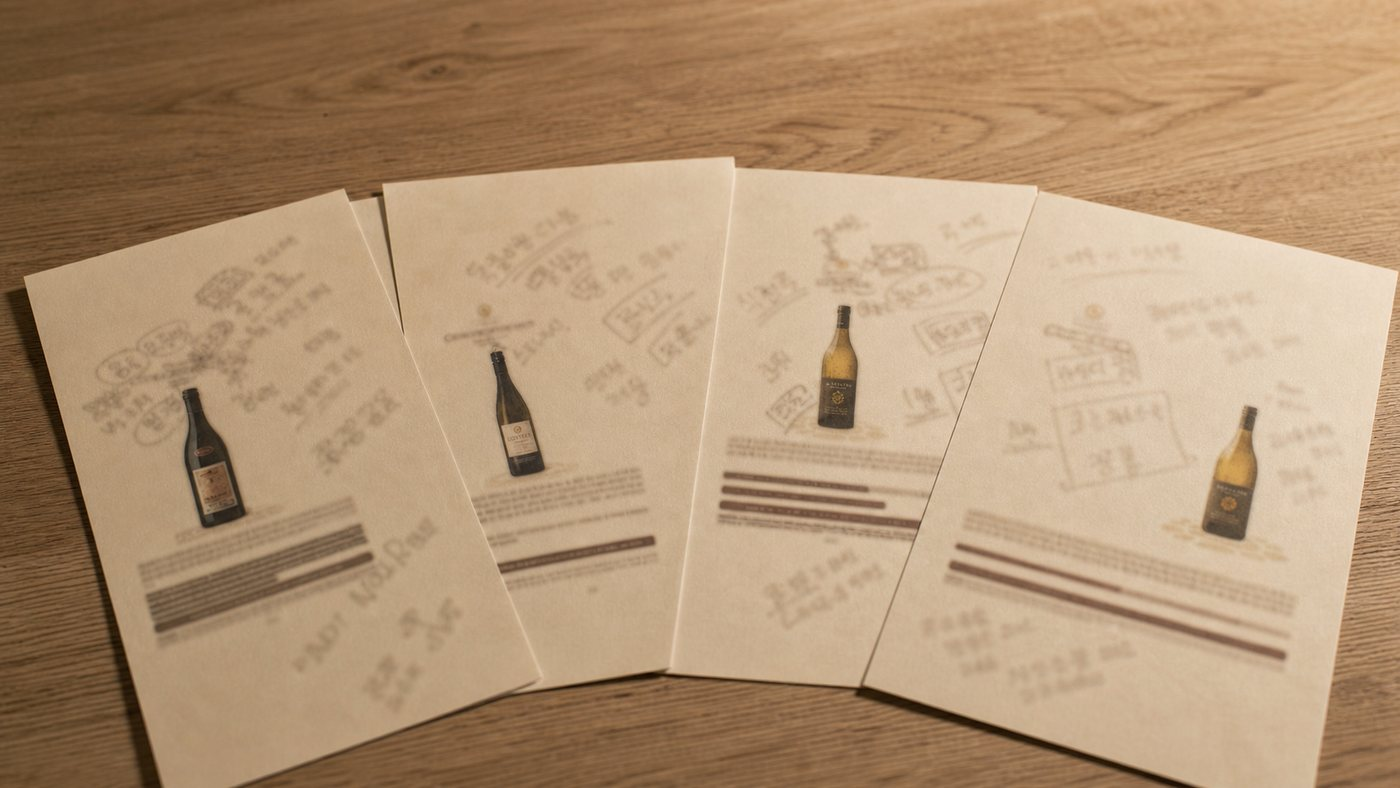
The notes I left that night were less a list of wine names than a record of the conversation and questions that carried us toward dawn.
PodoNote began from those notes. Recording one glass created the next question, and following that question opened a wider world. This first post begins with that night because I wanted to hold on to the excitement I felt when wine first became something to learn.